Irregular Period Calculator
Not everyone's cycle is 28 days. Our smart algorithm helps find your next period window based on your unique history.
Other Free Tools & Resources
How to Use the Irregular Period Calculator
Enter Your Cycle History
Input the start dates of your last 3-6 menstrual cycles. The more history you provide, the more accurate your predictions will be.
Set Your Period Length
Enter how many days your period typically lasts (usually 3-7 days). This helps calculate the exact dates of your next period.
View Your Prediction Window
See your predicted window with earliest, most likely, and latest dates. The visualization shows the range of possible start dates.
Check Your Confidence Level
Review your prediction confidence level based on cycle consistency. High confidence means your cycles are regular.
How We Calculate Your Irregular Period
Average Cycle
Σ(days) / n
Standard Deviation
σ = √(Σ(x-x̄)²/n)
Confidence
- σ≤3 days → High
- σ≤6 days → Medium
- σ>6 days → Low
Average Cycle
Σ(days) / n
Standard Deviation
σ = √(Σ(x-x̄)²/n)
Confidence
- σ≤3 days → High
- σ≤6 days → Medium
- σ>6 days → Low
📅 Prediction Window
Earliest
Most Likely
Latest
Earliest
Most Likely
Latest
Results are estimates only, not medical advice. Individual cycles may vary.
Understanding Irregular Periods: What It Means for Your Health
For many, the "perfect" 28-day cycle is more of a textbook myth than a biological reality. If your cycle arrives early, late, or skips a month entirely, you aren't alone. However, navigating this unpredictability requires more than just guesswork; it requires a specialized Irregular Period Calculator that understands the nuances of hormonal fluctuations.
Key Statistics About Irregular Periods
14-25%
of women experience irregular menstrual cycles (ACOG)
21-35 days
is the normal menstrual cycle length range (NHS UK)
6-12%
of women of reproductive age have PCOS (NICHD)
What Is Actually "Normal"?
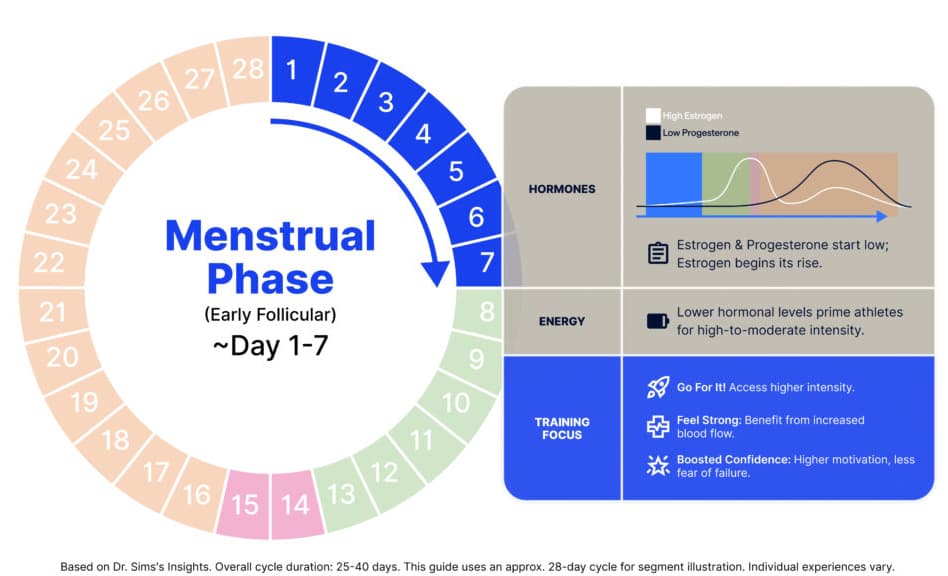
According to the American College of Obstetricians and Gynecologists (ACOG), a typical adult menstrual cycle lasts anywhere from 21 to 35 days. Irregularity occurs when your cycle consistently falls outside this range or varies significantly in length from month to month. This is where a standard tracker fails and a dedicated Irregular Period Calculator becomes essential. By using an Irregular Period Calculator, you can move away from fixed dates and start predicting "windows" of time, which offers a much more realistic view of your reproductive health.
Common Culprits Behind the Chaos
Why does your body deviate from the script? There are several biological and lifestyle factors that an Irregular Period Calculator helps you monitor: 1. Polycystic Ovary Syndrome (PCOS): A common hormonal imbalance that often causes skipped or prolonged cycles. An Irregular Period Calculator is often the first tool women use to realize their patterns need medical attention. 2. Thyroid Dysfunction: Your thyroid regulates your metabolism and affects your ovaries. If your thyroid is overactive or underactive, your data in an Irregular Period Calculator will likely show significant gaps. 3. Chronic Stress: High cortisol levels can suppress ovulation. By tracking these "stress gaps" in an Irregular Period Calculator, you can see the direct impact of your lifestyle on your cycle. 4. Perimenopause: As you approach menopause, cycles naturally become erratic. An Irregular Period Calculator helps you document this transition for your doctor.

How an Irregular Period Calculator Bridges the Gap
Unlike basic tools, a robust Irregular Period Calculator uses moving averages and standard deviations. When you input your history into an Irregular Period Calculator, it doesn't just add 28 days to your last start date. Instead, the Irregular Period Calculator analyzes the variance. If you are trying to conceive or simply want to be prepared, the Irregular Period Calculator provides a "likely window" for your next period. This data-driven approach used by an Irregular Period Calculator reduces the anxiety of the unknown, giving you a sense of control over your body.
When to Step Away from the Calculator and See a Doctor
While an Irregular Period Calculator is an incredible tool for self-awareness, it is not a diagnostic device. Medical experts suggest scheduling an appointment if: 1. Your cycles consistently last longer than 35 days or shorter than 21 days. 2. You experience sudden, extreme irregularity after years of being regular. 3. Your period lasts longer than 7 days or is exceptionally heavy. When you do visit a professional, the data logged in your Irregular Period Calculator will be your most valuable asset. It provides your physician with a clear, objective history of your symptoms and timing, making an accurate diagnosis much faster.
Empowerment Through Data
Your cycle is a vital sign, much like your blood pressure or heart rate. Trusting an Irregular Period Calculator to map your unique rhythm is the first step toward proactive health management. Whether you're dealing with PCOS or just a high-stress month, let our Irregular Period Calculator do the heavy lifting of prediction so you can focus on feeling your best.
Irregular Period FAQ: Answers from Experts
While having an unpredictable cycle can make timing conception more challenging, it does not necessarily mean you cannot get pregnant. The primary hurdle is identifying your fertile window. Because ovulation may occur at different times each month, using an Irregular Period Calculator is vital to mapping out the range of days when you are most likely to conceive. From a clinical perspective, if you are not ovulating at all (anovulation), you should consult a specialist. However, for most, an Irregular Period Calculator provides the necessary data to narrow down the best days for intercourse, significantly increasing your chances of success.
Standard pregnancy math relies on the Naegele's Rule, which assumes a 28-day cycle. For those with variance, this method is often inaccurate. Medical professionals typically recommend an early dating ultrasound to confirm the gestational age. In the meantime, you can provide your doctor with the historical data from your Irregular Period Calculator. By showing the variance in your past cycles via an Irregular Period Calculator, you help your care team understand that your Day 1 might not align with standard averages, leading to a much more personalized and accurate estimated due date (EDD).
Calculating ovulation when your dates shift requires looking for a window rather than a single day. You should monitor physical signs like cervical mucus changes alongside the data provided by your Irregular Period Calculator. An advanced Irregular Period Calculator uses your previous 3 to 6 months of data to determine your shortest and longest cycles. By establishing this range, the Irregular Period Calculator can forecast a 5-to-7-day fertile window. Relying on this data-driven approach from an Irregular Period Calculator is much more effective than using a generic calendar that assumes everyone ovulates on Day 14.
To find your average, you should sum the total days of your last six cycles and divide by six. However, for those with high variance, the simple average can be misleading. This is where an Irregular Period Calculator becomes indispensable. An Irregular Period Calculator doesn't just give you a flat average; it calculates the standard deviation to show you how much your cycle typically fluctuates. Understanding this variance through an Irregular Period Calculator helps you distinguish between a cycle that is slightly off and one that is truly abnormal, which is a key distinction in reproductive health.
For individuals with PCOS, hormones often don't follow a predictable rise and fall, making exact predictions difficult. While no digital tool can be 100% accurate for PCOS, an Irregular Period Calculator is an essential management tool. By consistently logging your data into an Irregular Period Calculator, you can identify emerging patterns that might otherwise go unnoticed. Most endocrinologists recommend using an Irregular Period Calculator to track these long-term trends, as this objective history is far more useful for medical diagnosis than relying on memory alone during a consultation.
If your actual start dates consistently fall outside the window predicted by your Irregular Period Calculator, it may be a sign of an underlying hormonal shift or significant lifestyle stress. Medical experts at the Mayo Clinic suggest that cycle tracking as a vital sign is crucial. If the Irregular Period Calculator shows a persistent trend of increasing irregularity over 90 days, you should schedule an appointment with a gynecologist. Bring the digital logs from your Irregular Period Calculator to your appointment; this allows your doctor to see exactly how your cycle has deviated, facilitating a much faster and more accurate medical evaluation.